
The evil machinations of Sambhaji of Kolhapur were revealed for one and all to see when Udaji Chavan sent agents to murder Chhatrapati Shahu Maharaj when he was out hunting. Shahu Raje immediately set aside his friendly disposition towards his cousin and instructed Trimbakrao Dabhade to lead the army to march into Sambhaji's territory. ... Continue Reading →
On the history trail: Sambhaji of Kolhapur and Chhatrapati Shahu Maharaj
The brilliance of Peshwa Bajirao on the battlefield and in the Maratha Court will go down in history as the finest chapter in military stratagem and diplomacy respectively. Even his staunch critics were forced to acknowledge his astuteness and competency. This however did not deter them from intriguing with the Nizam to subdue him and depose... Continue Reading →
On the history trail: Peshwa Bajirao caught in the middle of political intrigues
After the humiliating defeat at Palkhed and the Mughal losses in Gujarat, Malwa and Bundelkhand, the Nizam knew that he was no match for the Peshwa‘s brilliance and military stratagem. Full of prejudice and evil machinations, he chose the cowardly approach to malign his name and dissuade the ruler at Delhi to sign a peace agreement. Deep Singh's mission... Continue Reading →
On the history trail: Nizam-ul-Mulk refuses to make peace with the Marathas
The agents sent by the ruler of Delhi came back with glowing reports of the Marathas and categorically declared that if the Mughals were to agree to 11 and 15 lacs for annual chauth of Gujarat and Malwa respectively, then the Marathas would not interfere with the Mughals again. Nizam-ul-Mulk, after being defeated by Peshwa... Continue Reading →
On the history trail: The Mughals want peace with the Marathas
The decisive victories over the Mughals in Malwa, Bundelkhand and Gujarat in 1729 created quite a consternation in the heart of the ruler of Delhi. Though Nizam-ul-Mulk was checked to some extent in Palkhed, he continued to cause trouble for the Marathas in the Deccan. The death of Giridhar Bahadur and the defeat of Muhammad... Continue Reading →
On the history trail: Battle of Bundelkhand
The invasion of Malwa by Peshwa Bajirao and Chimaji Appa on the advice of Sawai Jai Singh opened up new avenues for the Marathas and the Rajputs who were dissatisfied with the Mughals. The Bundelas in particular had been friendly with the Marathas for a long time and adopted their approach to fight for their independence.... Continue Reading →
On the history trail: Battle of Amjhera
The military stratagem displayed by Peshwa Bajirao under difficult conditions in Palkhed proved his ability to take on a war veteran like the Nizam with relative ease. This notable victory helped the Peshwa secure the confidence of Chhatrapati Shahu Maharaj and others. Peshwa had already formed his own group of faithful followers both in the... Continue Reading →
On the history trail: Battle of Palkhed
With opposition building on all fronts, Chhatrapati Shahu Maharaj was at his wit's end. Peshwa Bajirao was still in the Karnatak and those close to him advised him to effect a compromise with the Nizam. Shahu Raje accepted their advice and instructed his Pratinidhi and Sumant to negotiate a peace treaty with the Nizam. The Pratinidhi proposed a... Continue Reading →
On the history trail: Nizam-ul-Mulk challenges Chhatrapati Shahu Maharaj
The three years from February 1725 to February 1728 (Battle of Shakar Kheda to Palkhed) fairly established the nature of the relationship between the Marathas and the Nizam that would eventually be subjected to the paramountcy of the British. The Marathas were determined to enforce the rights granted to them in 1719. However, the... Continue Reading →
On the history trail: Peshwa Bajirao’s expedition to the Karnatak
The decisive win for Nizam-ul-Mulk over Mubariz Khan in the Battle of Sakhar Kherda established his undisputed dominance over the Deccan. The Marathas had been watching the battle on the sidelines with keen interest knowing full well that the Nizam's victory would dent their prospects of expansion in the south. Chhatrapati Shahu Maharaj was... Continue Reading →
On the history trail: Peshwa Bajirao faces a new danger
Muhammad Amin Khan, the cousin of Nizam-ul-Mulk who was appointed as the Wazir died in February 1721 creating a vacancy that the ruler of Delhi felt only the experienced Nizam-ul-Mulk could fill. However, the Nizam was not keen on getting stuck in the political intrigues of the court as that would greatly curtail his ambition to... Continue Reading →
On the history trail: Marathas on slippery ground after the fall of the Sayyid Brothers
The dramatic fall of the Sayyid brothers put the Marathas and their plans of obtaining the grants as per the treaty in doubt. It was well known that Nizam-ul-Mulk, the sitting ruler and his mother and many others in the Delhi court had particular disdain for the Marathas and Hindus. Nizam-ul-Mulk was known never... Continue Reading →
Matri Vav, Kankavati Village, Dhrangadhra Taluka, Surendranagar District, Gujarat
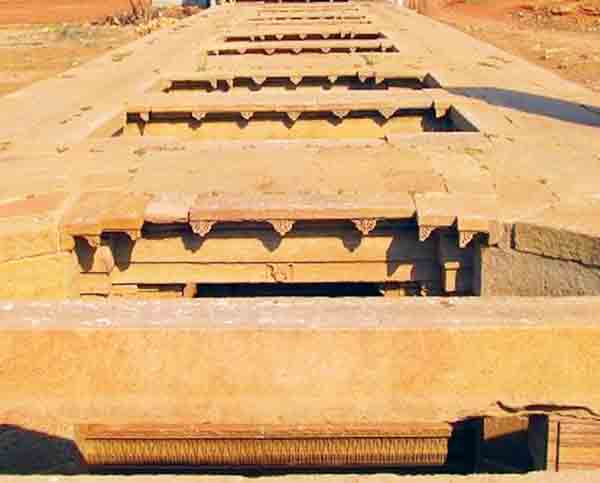
The mighty Jhalas became a formidable force in the Saurashtra region by the late 11th century and formed seats of power at Santalpur, Halvad and Kankavati. They established the capital city of Dhrangadhra in the mid-18th century which eventually became a princely state till Independence. Dhrangadhra has been of tremendous interest to historians, archaeologists... Continue Reading →
On the history trail: Fall of the Sayyid Brothers
The new ruler installed in Delhi by the Sayyid brothers in 1719 began to intrigue with their enemies to bring about their ruin. Chin Qilich Qamaruddin Khan (Nizam-ul-Mulk) the only worthy opponent of the Sayyids was appointed to the government of Malwa. He left Delhi on 15 March 1719 and upon reaching Ujjain, began gathering... Continue Reading →
Bhamaria Vav, Sojali Village, Mehmedabad, Kheda District, Gujarat
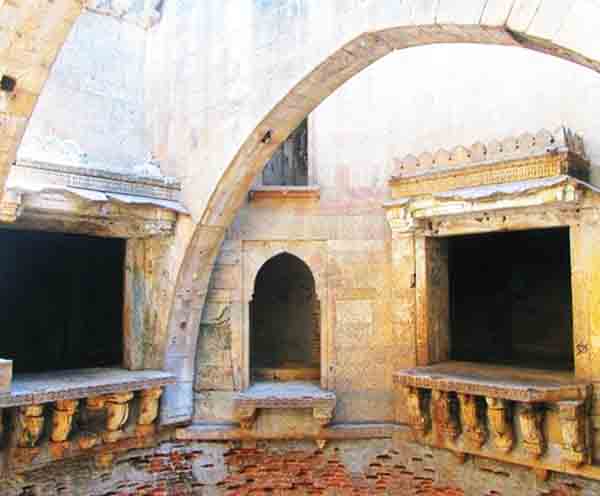
Perhaps, one of the deepest stepwells in Gujarat, the Bhamaria vav located a little away from the hustle and bustle of Sojali village has remained in obscurity for centuries. This 15th century vav was built as a pavilion inside an existing well-laid out garden. Though the stepwell and the surroundings are in ruins today, the imposing... Continue Reading →
On the history trail: Shrimant Bajirao appointed Peshwa
The sudden demise of Peshwa Balaji Vishwanath was a tremendous loss to Chhatrapati Shahu Maharaj who owed his position and fortune to this devoted servant. Bajirao, then of 19 years had been a part of the contingent that had gone to Delhi and had paid close attention to the events that had unravelled following the death... Continue Reading →
Mata Bhavani ni Vav, Asarva, Ahmedabad, Gujarat
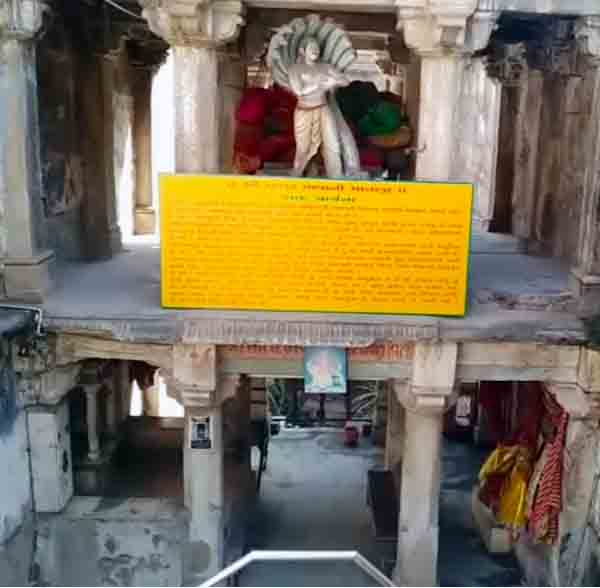
One of the earliest stepwells or vavs of Gujarat is the 11th century Mata Bhavani ni vav located at Asarva in Ahmedabad. This east-facing vav was built by the Solankis and renovated by the Vaghelas in the 14th century before being confiscated by the Gujarat Sultanate. Interestingly, this vav is one of the longest along the east -... Continue Reading →
On the history trail: The sad demise of Maharani Yesubai and Peshwa Balaji Vishwanath
A grand Darbar was held at Satara to rejoice the victorious return of Maharani Yesubai and others from captivity. As Santaji Bhosle had lost his life in Delhi, his brother Ranoji was conferred the title of Sawai Santaji and rewards for his sacrifice. The Peshwa's return from Delhi with tremendous success gave a new impetus... Continue Reading →
Prachin Vav, Jhaloda Village, Kadi, Mehsana District, Gujarat
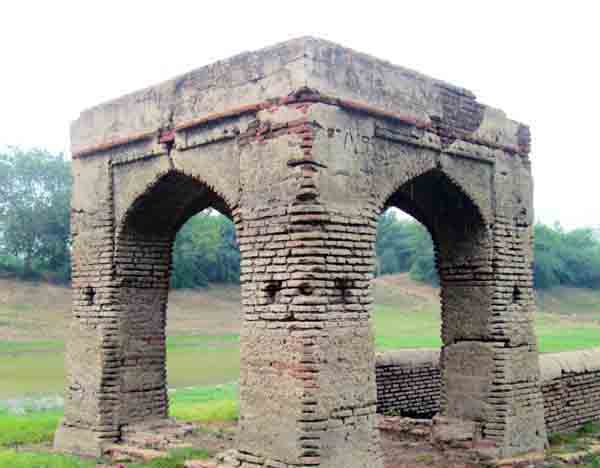
Stepwells built in Akhanda Bharat since the ancient times offer valuable insight into the social and cultural propensity, religious practices and architecture and art of that period. These vavs are ingenious edifices built with locally available materials and display a rare harmony of structural soundness and architectural excellence. It is very uncommon to find stepwells... Continue Reading →
On the history trail: A power struggle at Delhi
When the ruler at Delhi was informed of Sayyid Husain Ali's approach to the capital, he feared for his life and sent repeated messages and special agents to dissuade the latter. Sayyid Husain Ali requested the Maratha commanders to either halt or return but they refused. They had been given a clear task of... Continue Reading →
Uvarsad Vav, Uvarsad Village, Gandhinagar District, Gujarat
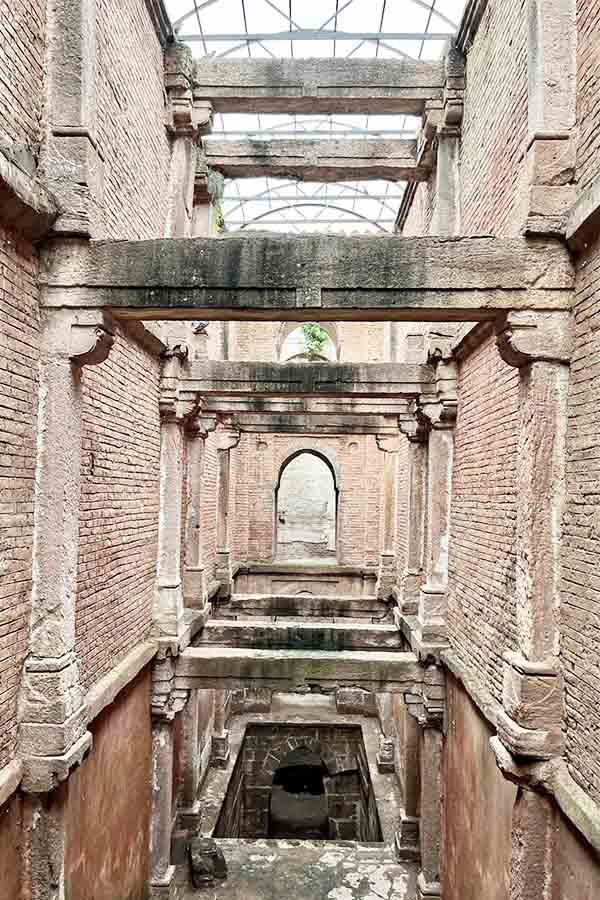
Gujarat is dotted with innumerable stepwells that offer a glimpse into the religious and social practices, cultural traditions and customs and art and architecture of that period. Though a fair number of these have either fallen into a state of disrepair or disuse, there is a spirited movement across the state by several heritage enthusiasts... Continue Reading →
On the history trail: Peshwa Balaji Vishwanath heads to Delhi
Chhatrapati Shahu Maharaj's primary concern after signing a peace treaty with Sayyid Husain Ali was to ensure that his mother Maharani Yesubai, wife Savitribai and brother Madansinh who were held hostage in Delhi would be released immediately. He had already deputed Parasnis Yadavrao Prabhu to Delhi to arrange for the release in 1715. After... Continue Reading →
Brahma Kund, Sihor, Bhavnagar District, Gujarat
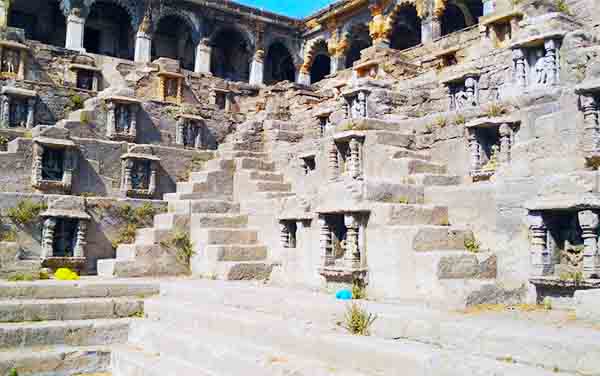
One of the lesser-known stepwells built in the 12th century by the valorous Siddharaja Jayasimha of the Solankis is the Brahma Kund in Sihor. This magnificent structure has in fact also great spiritual significance and has even been mentioned in the Puranas thereby, suggesting that this stepwell was built around an ancient kund. As... Continue Reading →
On the history trail: A peace treaty signed by Chhatrapati Shahu Maharaj with the Mughals
One of the main reasons Chhatrapati Shahu Maharaj agreed to a peace treaty with Sayyid Husain Ali was to secure the release of his mother Maharani Yesubai, wife Savitribai and brother Madansinh who were held hostage in Delhi. Peshwa Balaji Vishwanath and Shankaraji Malhar cleverly put in the stipulation to that effect in return for... Continue Reading →
 sahasa.in