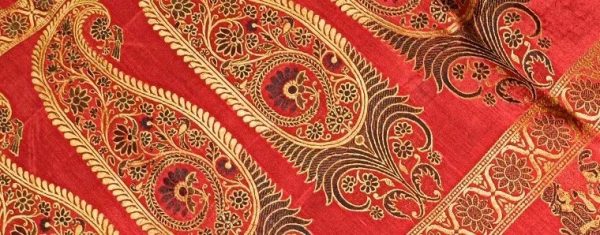
The history of Baluchari that literally means sandy river bank can be traced back to 1704 CE when Murshid Quli Khan, the Nawab of Bengal who patronized the flourishing weaving tradition brought several weavers from Dhaka in Bangladesh and helped them establish a small weaving community in Baluchar village on the bank of the Bhagirathi... Continue Reading →
Pattamadai Pai (Pattamadai Mats) of Tamil Nadu
The quaint village of Pattamadai in Tirunelveli district in Tamil Nadu is famous for its centuries-old handwoven mats made of korai grass. These exquisite mats found its place on the international market when it was gifted to Queen Elizabeth II on her coronation in 1953 and since then has been presented to dignitaries around the world.... Continue Reading →
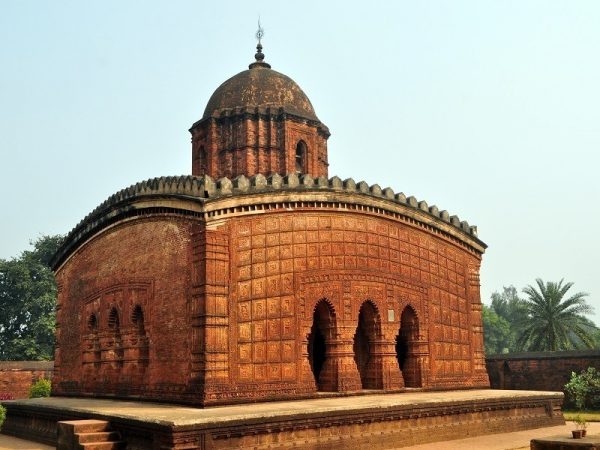
Madan Mohan Temple, Bishnupur, Bankura District, West Bengal
Bishnupur or ‘land of Vishnu’ has many stunning terracotta temples to its credit but the Madan Mohan Temple stands tall with its outstanding detailed relief work. This centuries-old temple was built by the devout Durjan Singha Dev of Mallabhum around 1695 CE. Legend has it that the original idol of Madan Mohan in ashtadhatu was actually... Continue Reading →
Rasmancha, Bishnupur, Bankura District, West Bengal
The long-established tradition of rasa leela (Dance of Divine Love) has been prevalent in West Bengal for centuries. This auspicious occasion is either celebrated on Krishna Janmashtami or on Kartik Purnima where Lord Krishna is brought from different temples and placed on a viewing pavilion called rasmancha or dolmancha. One of the most famous rasmancha is the Rasmancha at... Continue Reading →
Bardhaman Sitabhog of West Bengal
The lip-smacking Sitabhog served with nikhuti (tiny gulab jamuns) will assuredly send you to a heavenly place! This century-old sweet of Bardhaman along with Mihidana is an invention of the late Khettranath Nag. The city of Bardhaman derives its name from Mahavira or Vardhaman Swami (around the 6th century B.C.E.) and is famous for its... Continue Reading →
Bardhaman Mihidana of West Bengal
The delectable Bardhaman Mihidana that literally means fine grains was first prepared along with Sitabhog in honour of Maharaja Mahtab Chand Bahadur by the late Khettranath Nag according to his grandson, the late Nagendranath Nag. Seventy-two years later, both these dishes were served to Lord Curzon in 1904 when he visited Bardhaman on the invitation... Continue Reading →