
Khanderao Dabhade, appointed as Senapati by Chhatrapati Shahu Maharaj on 11 January 1717 had once been a competent leader. However, he was greatly overshadowed by the dashing Peshwa Bajirao who had proved his mettle more than once. The Peshwa on his part continued to serve the Chhatrapati assiduously by raising independent armies to secure the boundaries and lead expeditions... Continue Reading →
On the history trail: Sambhaji of Kolhapur subdued
The evil machinations of Sambhaji of Kolhapur were revealed for one and all to see when Udaji Chavan sent agents to murder Chhatrapati Shahu Maharaj when he was out hunting. Shahu Raje immediately set aside his friendly disposition towards his cousin and instructed Trimbakrao Dabhade to lead the army to march into Sambhaji's territory. ... Continue Reading →
On the history trail: Sambhaji of Kolhapur and Chhatrapati Shahu Maharaj
The brilliance of Peshwa Bajirao on the battlefield and in the Maratha Court will go down in history as the finest chapter in military stratagem and diplomacy respectively. Even his staunch critics were forced to acknowledge his astuteness and competency. This however did not deter them from intriguing with the Nizam to subdue him and depose... Continue Reading →
On the history trail: Peshwa Bajirao caught in the middle of political intrigues
After the humiliating defeat at Palkhed and the Mughal losses in Gujarat, Malwa and Bundelkhand, the Nizam knew that he was no match for the Peshwa‘s brilliance and military stratagem. Full of prejudice and evil machinations, he chose the cowardly approach to malign his name and dissuade the ruler at Delhi to sign a peace agreement. Deep Singh's mission... Continue Reading →
On the history trail: Nizam-ul-Mulk refuses to make peace with the Marathas
The agents sent by the ruler of Delhi came back with glowing reports of the Marathas and categorically declared that if the Mughals were to agree to 11 and 15 lacs for annual chauth of Gujarat and Malwa respectively, then the Marathas would not interfere with the Mughals again. Nizam-ul-Mulk, after being defeated by Peshwa... Continue Reading →
On the history trail: The Mughals want peace with the Marathas
The decisive victories over the Mughals in Malwa, Bundelkhand and Gujarat in 1729 created quite a consternation in the heart of the ruler of Delhi. Though Nizam-ul-Mulk was checked to some extent in Palkhed, he continued to cause trouble for the Marathas in the Deccan. The death of Giridhar Bahadur and the defeat of Muhammad... Continue Reading →
On the history trail: Battle of Bundelkhand
The invasion of Malwa by Peshwa Bajirao and Chimaji Appa on the advice of Sawai Jai Singh opened up new avenues for the Marathas and the Rajputs who were dissatisfied with the Mughals. The Bundelas in particular had been friendly with the Marathas for a long time and adopted their approach to fight for their independence.... Continue Reading →
On the history trail: Battle of Amjhera
The military stratagem displayed by Peshwa Bajirao under difficult conditions in Palkhed proved his ability to take on a war veteran like the Nizam with relative ease. This notable victory helped the Peshwa secure the confidence of Chhatrapati Shahu Maharaj and others. Peshwa had already formed his own group of faithful followers both in the... Continue Reading →
On the history trail: Battle of Palkhed
With opposition building on all fronts, Chhatrapati Shahu Maharaj was at his wit's end. Peshwa Bajirao was still in the Karnatak and those close to him advised him to effect a compromise with the Nizam. Shahu Raje accepted their advice and instructed his Pratinidhi and Sumant to negotiate a peace treaty with the Nizam. The Pratinidhi proposed a... Continue Reading →
On the history trail: Nizam-ul-Mulk challenges Chhatrapati Shahu Maharaj
The three years from February 1725 to February 1728 (Battle of Shakar Kheda to Palkhed) fairly established the nature of the relationship between the Marathas and the Nizam that would eventually be subjected to the paramountcy of the British. The Marathas were determined to enforce the rights granted to them in 1719. However, the... Continue Reading →
On the history trail: Peshwa Bajirao’s expedition to the Karnatak
The decisive win for Nizam-ul-Mulk over Mubariz Khan in the Battle of Sakhar Kherda established his undisputed dominance over the Deccan. The Marathas had been watching the battle on the sidelines with keen interest knowing full well that the Nizam's victory would dent their prospects of expansion in the south. Chhatrapati Shahu Maharaj was... Continue Reading →
On the history trail: Peshwa Bajirao faces a new danger
Muhammad Amin Khan, the cousin of Nizam-ul-Mulk who was appointed as the Wazir died in February 1721 creating a vacancy that the ruler of Delhi felt only the experienced Nizam-ul-Mulk could fill. However, the Nizam was not keen on getting stuck in the political intrigues of the court as that would greatly curtail his ambition to... Continue Reading →
On the history trail: Marathas on slippery ground after the fall of the Sayyid Brothers
The dramatic fall of the Sayyid brothers put the Marathas and their plans of obtaining the grants as per the treaty in doubt. It was well known that Nizam-ul-Mulk, the sitting ruler and his mother and many others in the Delhi court had particular disdain for the Marathas and Hindus. Nizam-ul-Mulk was known never... Continue Reading →
On the history trail: Fall of the Sayyid Brothers
The new ruler installed in Delhi by the Sayyid brothers in 1719 began to intrigue with their enemies to bring about their ruin. Chin Qilich Qamaruddin Khan (Nizam-ul-Mulk) the only worthy opponent of the Sayyids was appointed to the government of Malwa. He left Delhi on 15 March 1719 and upon reaching Ujjain, began gathering... Continue Reading →
On the history trail: Shrimant Bajirao appointed Peshwa
The sudden demise of Peshwa Balaji Vishwanath was a tremendous loss to Chhatrapati Shahu Maharaj who owed his position and fortune to this devoted servant. Bajirao, then of 19 years had been a part of the contingent that had gone to Delhi and had paid close attention to the events that had unravelled following the death... Continue Reading →
History of the Prachin Shiv Mandir at Agra – Part II (The Myth of the Taj Mahal)
Since the ancient times, it has been the practice of Hindu kings to assiduously follow the tenets as laid down in the Shilpa Shastra while building forts, palaces, mansions, temples and dharmashalas. Traditionally, these grand structures were built along river banks, seashores or lakes to observe the obligatory rites and rituals of the Hindu scriptures. ... Continue Reading →
History of the Prachin Shiv Mandir at Agra – Part I (The Myth of the Taj Mahal)
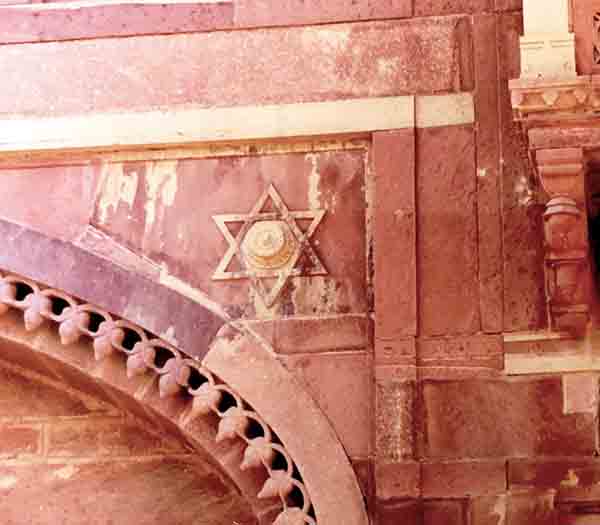
Lazy and uninformed "historians" of Indian (commissioned by the British Raj) and British origin have done an outstanding job for over three centuries to whitewash our glorious Hindu heritage and relegate the contributions of our valorous Hindu kings to obscurity. A concerted effort to prevent one from learning about Hinduism, the oldest civilization in the... Continue Reading →
History of Banaras – Part VII (Conclusion)
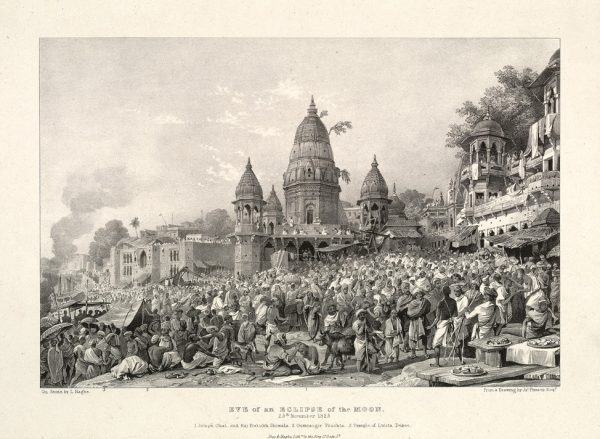
अयोध्या मथुरा माया काशी काञ्ची अवन्तिका । पुरी द्वारावती चैव सप्तैते मोक्षदायकाः॥ Kashi, a name that evokes a multitude of emotions ranging from bliss, joy, ecstasy, love and relief is the city that promises liberation. Since the dawn of time, Kashi has been considered to be the centre of learning, knowledge, wisdom and Advaita. Sages,... Continue Reading →
History of Banaras – Part VI (Contribution by the Marathas)
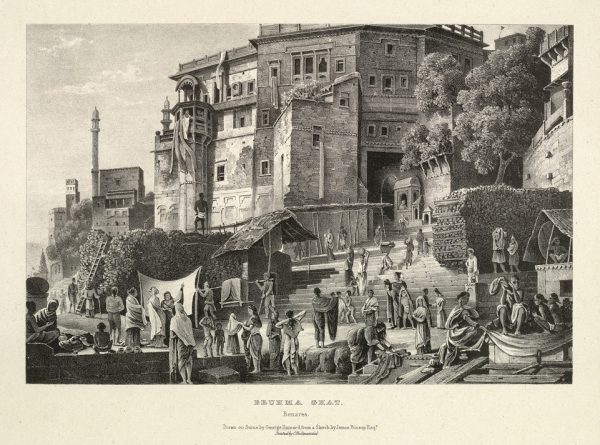
Chhatrapati Shivaji Maharaj in 1666 had taken refuge in the ancient city of Benares after his miraculous escape from captivity. He was most distressed on seeing the fear in the eyes of Hindus who had suffered immensely in the hands of the Mughals. Even though Raje desired to rebuild Kashi after the horrific desecration in... Continue Reading →
History of Banaras – Part V (Atrocities and bloodbath by Aurangzeb)
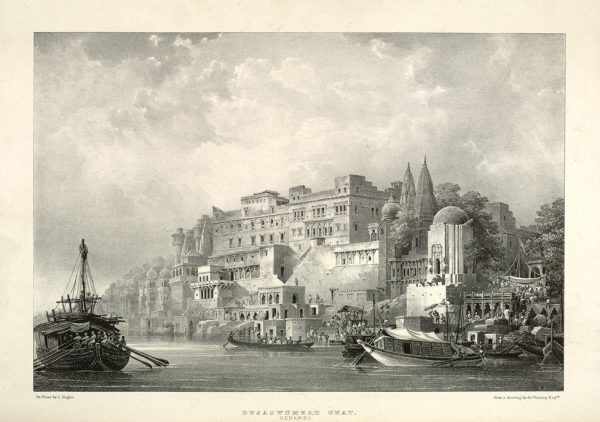
Aurangzeb seized absolute control of the throne in 1661 after murdering Dara Shikoh, instigating the execution of Shah Shuja in the hands of local rulers of Burma, executing his younger brother Murad Bakhsh in jail and imprisoning his father, Shah Jahan. Memoirs and court records graphically describe his fanaticism and deep roots in Islamic... Continue Reading →
History of Banaras – Part IV (Plunder and destruction by the Mughals)
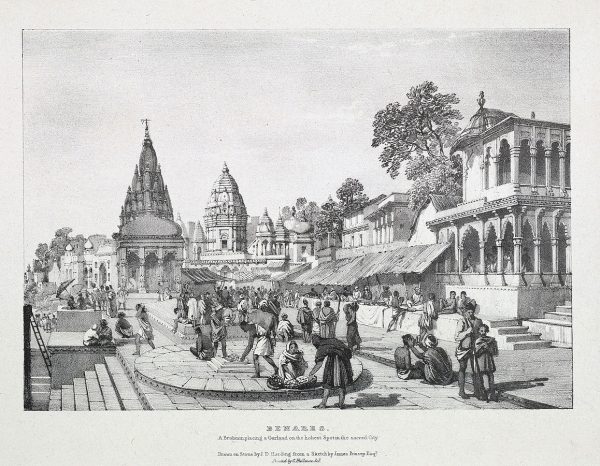
It is difficult to ascertain the extent of damage inflicted by the Delhi Sultanate, but a fair number of mosques and tombs built on the sites of temples during this period using the stones of the temples demolished are still visible in the city. It has been documented that Razia Sultana had built a mosque... Continue Reading →
History of Banaras – Part III (Trail of destruction by the Delhi Sultanate)
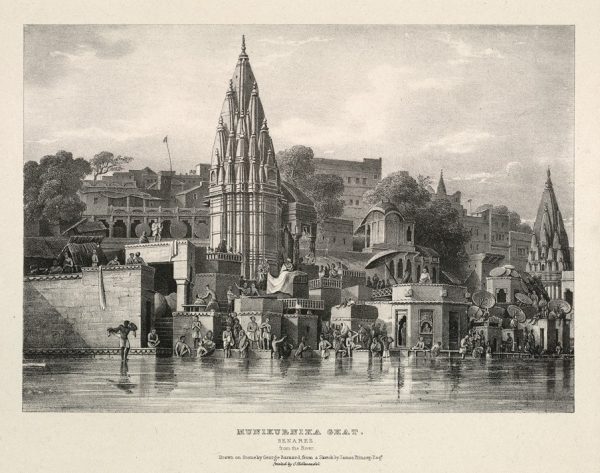
The second attack by the Muslim invader Qutb al-Din Aibak in 1197 - 98 effectively ended the golden period of the Gahadavalas and established a violent intolerant Muslim rule that was determined to destroy every trace of the glorious heritage of Kashi. Kashi, a city that has existed since the dawn of creation grew in... Continue Reading →
History of Banaras – Part II
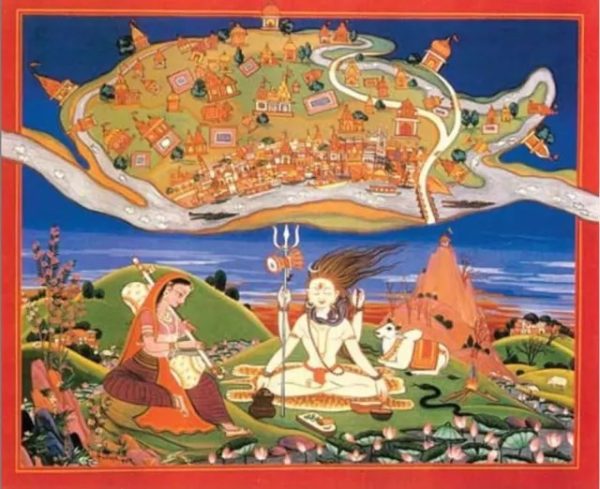
The stature of Benares as the seat of learning, knowledge and wisdom grew under the patronage of the Maukharis of Kannauj, Gurjara-Pratiharas and the mighty Kalachuris towards the end of the 10th century. The period of the Kalachuris is often referred to as the golden era in the city's history marked with the construction... Continue Reading →
Mahadeva Temple, Khardeori Village, Mandla District, Madhya Pradesh
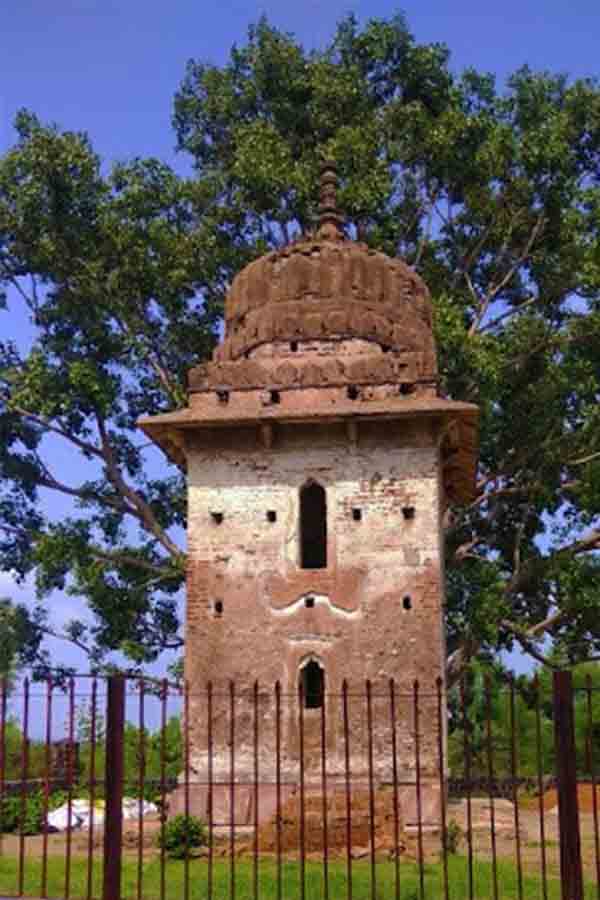
Mandla, once the stronghold of the mighty Gondwana dynasty is dotted with temples, halls and impregnable forts. Under the leadership of their greatest king Maharaja Sangram Shah, the Garha Mandla kingdom of Gondwana expanded its territory on both sides of the Narmada River. Rani Durgavati who took over the reins of the kingdom following... Continue Reading →
 sahasa.in