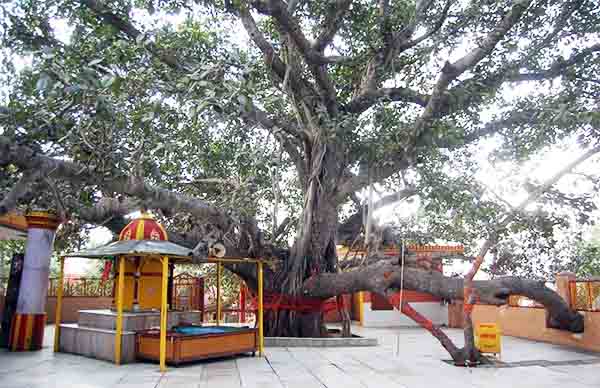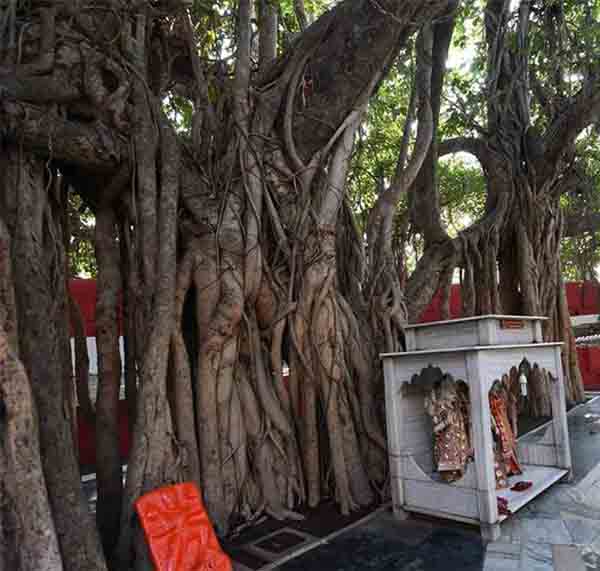
The sacrosanct tirthasthala of Shukratal now known as Shukrateerth (Shukratirth) is one of the most picturesque places located on the course of the downstream Ganga. This beautiful place full of ancient temples, bathing ghats and wells is truly a spiritual treasure trove for the followers of Sanatana and Advaita. This divine place derives its name from the... Continue Reading →
Patalpuri Mandir and Akshayavat, Prayagraj, Uttar Pradesh
Akhanda Bharat has many stunning gems in its bosom but the crown jewel is undoubtedly the ancient Patalpuri Temple and the extraordinary Akshayavata. Akshayavata is derived from the Sanskrit words akshaya meaning eternal or imperishable or indestructible and vata meaning banyan or sacred fig and therefore, literally translates to the eternal banyan (fig). According to the Hindu scriptures,... Continue Reading →
Takshakeshwar Nath Mandir, Prayagraj, Uttar Pradesh
Takshakeshwar Nath Mandir situated on the bank of the Yamuna River is one of the oldest temples in Prayagraj. The temple is believed to be at least 5000 years old if not more and historical and archaeological evidence found at the site suggests that this temple has been in existence since the ancient times. ... Continue Reading →
Samudra Koop, Ulta Qila, Jhusi, Prayagraj District, Uttar Pradesh
Samudra Koop that literally translates to ocean well is one of the most sacrosanct tirths of Prayagraj. Located in the archaeologically important town of Jhusi, this ancient well was established during the reign of the Chandravamsa dynasty (Lunar dynasty) roughly around 7100 BCE. Jhusi used to be known as Pratisthan Pur during the reign of... Continue Reading →
Nag Vasuki Temple, Prayagraj, Uttar Pradesh
Nag Vasuki, an ancient temple located on the bank of the holy Ganges to the north of the sacrosanct Triveni Sangam draws lakhs of devotees on the auspicious Kumbh, Ardha Kumba, Magha Mela, Naga Panchami and the month of Shravan. A trip to Prayagraj is deemed complete and successful only if a pilgrim has a dip in the... Continue Reading →