Upon hearing Chhatrapati Rajaram Maharaj's sudden demise, Ramchandra Pant Amatya headed to Sinhagad and conveyed the news to the various officers and generals requesting them to continue their good work and perform their respective duties as before. He appealed to them to exert themselves with more fervour and reminded them of their ambitious goal of... Continue Reading →
On the history trail: Chhatrapati Rajaram Maharaj’s death
Just as the Marathas looked poised to reclaim their lost lands and begin the final battle for Akhanda Bharat, tragedy struck. Chhatrapati Rajaram Maharaj who had fought tirelessly against the Mughals found the strain of camp life unbearable and his health began to fail rapidly. He became so ill during the march that he had... Continue Reading →
On the history trail: Chhatrapati Rajaram Maharaj’s reign
Chhatrapati Rajaram Maharaj managed to elude the Mughal parties stationed around Jinji and proceeded to Vishalgad. He had sent offers of peace directly to Aurangzeb which were declined. As war raged on relentlessly, Rajaram Raje reached the Maratha land and decided that a new seat of power needs to be established. As both Raigad... Continue Reading →
On the history trail: The legendary guerrilla warfare of the Marathas
The tragic death of Santaji Ghorpade brought great joy to the Mughal camps who had lived in constant fear of him and his wrath on the battlefield. Santaji Ghorpade is undoubtedly one of the greatest masters of guerrilla warfare Akhanda Bharat has ever seen. His brilliant tactics, unwavering courage in the most perilous situations and... Continue Reading →
On the history trail: An Infusion of Religious Fervour by Chhatrapati Rajaram Maharaj
The primary aim of the Marathas during this perilous period of war with Aurangzeb was to convince their Hindu brothers who had joined the Mughal service to return to their king to defend the Maharashtra dharma. Hindavi Swarajya, the ambitious goal of the late Chhatrapati Shivaji Maharaj was designed to throw out the Muslim invaders... Continue Reading →
On the history trail: Marathas fight back at Jinji
With the Mughals hot on their trail and mounting pressure every day, the Marathas focussed on their primary goal to create a safe passage for Chhatrapati Rajaram Maharaj from Gingee and save him from a fate similar to his brother's and liberate the Maratha lands from the Mughal control. Aurangzeb was not one to... Continue Reading →
On the history trail: The heroism of Sarsenapati Santaji Ghorpade
As the siege of Jinji dragged on languidly, Aurangzeb became increasingly exasperated with both Zulfiqar Khan and his father, Asad Khan. He bemoaned the inability of his army to overcome the guerrilla tactics of the Marathas. Zulfiqar Khan had been given two clear tasks namely to capture Gingee and Chhatrapati Rajaram Maharaj and so far,... Continue Reading →
On the history trail: Gingee besieged and captured
Zulfiqar Khan after capturing Maharani Yesubai and young Shahu was immediately despatched to pursue Chhatrapati Rajaram Maharaj as he left for the Deccan. He left Aurangzeb's camp on 30 November 1689 and arrived at Gingee in June 1690 and laid siege to the fort. The siege lasted for 8 years and is probably one... Continue Reading →
On the history trail: Aurangzeb is displeased that Chhatrapati Rajaram Maharaj has made Gingee the new Maratha power
The shift of the Maratha power to Gingee created serious problems for Aurangzeb. It would be difficult for his men to receive information on what was happening within the four walls of Gingee. He decided to act quickly to put down the rising Maratha power. He left his camp of Koregaon on 18 December... Continue Reading →
On the history trail: Chhatrapati Rajaram Maharaj heads to Gingee
With mounting pressure and constant assaults on the Marathas by the Mughals, Chhatrapati Rajaram Maharaj revisited his strategy of staying put in Panhala. The situation was getting increasingly dangerous for him and his men and it was decided that they would make their way to the safe haven of Jinji in the Deccan. Jinji... Continue Reading →
On the history trail: The fall of Raigad and the extraordinary leadership of Ramchandra Pant Amatya
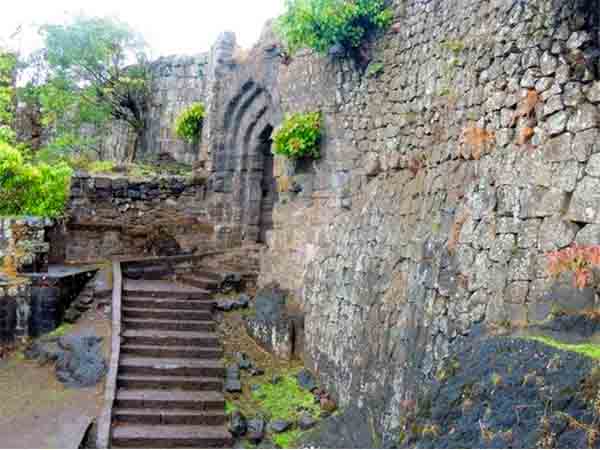
Raigad, one of the most impregnable forts of all the Maratha forts had been made largely inaccessible by the natural defences of Mother Earth. This fort was constructed on a large plateau with enough food, cattle and supplies required for a large military presence to hold out for a long time. In fact, this... Continue Reading →
On the history trail: Chhatrapati Rajaram Maharaj’s reign begins
With the tragic death of Shree Dharamveer Chhatrapati Sambhaji Maharaj, Aurangzeb's lifelong dream of capturing the Deccan was fulfilled. The whole territory from the Narmada to the Tungabhadra lay at his feet. However, the savagery of the desert barbarian Aurangzeb hardened the hearts of the Marathas and impelled them to protect their own and their... Continue Reading →
On the history trail: Chhatrapati Sambhaji Maharaj tortured to death in the most barbaric way ever seen by Aurangzeb
Shock, quickly followed by a wild outburst of rejoicing was witnessed when Aurangzeb and his men received the news of Chhatrapati Sambhaji Maharaj's capture at Akluj. The young king who had tried his best to follow in the footsteps of his father, the late Chhatrapati Shivaji Maharaj had terrorized Aurangzeb and the Mughals in his... Continue Reading →
On the history trail: Chhatrapati Sambhaji Maharaj betrayed and captured by Aurangzeb at Sangameshwar
The wily Aurangzeb continued to put pressure on the Marathas by despatching Shahâb ud-Din and his son, Chin Qilich Kamaruddin Khan to grab their territory in North Konkan and Baglan. Chhatrapati Sambhaji Maharaj was outraged on hearing the devious tactics employed by father and son to win over the Marathas. He launched a furious... Continue Reading →
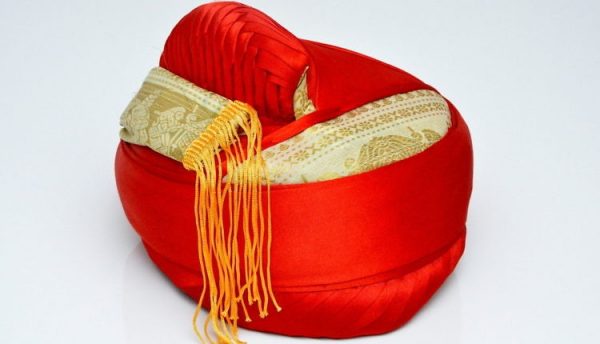
Puneri Pagadi, Maharashtra
Pagadi or turban has historically been a sign of culture, wisdom, virility and often used identify the different sections of community. Puneri pagadi is an inseparable part of Pune which is the cultural capital of Maharashtra. Puneri pagadi is conceptualized from the Peshwe turban worn by the Peshwas which itself was inspired by the traditional Chakribandh... Continue Reading →
Waghya Ghevada, Maharashtra
One of the most famous cash crops of Western Maharashtra is Waghya ghevada. Grown extensively in North Koregaon taluka of Satara district, this rajma was first cultivated in 1950 by the late Kashinath Mahajan who bought seeds of this variety from a trader in Pune. This variety soon became popular with the locals and was... Continue Reading →
Bhitargaon Temple, Bhitargaon, Kanpur District, Uttar Pradesh
One of the finest brick temples of India is the Bhitargaon Temple at Bhitargaon village in Ghatampur tehsil in Kanpur Nagar district. Considered to be the earliest surviving temple built by the Guptas, this architectural masterpiece is constantly in the news for its innovative construction as well as its mysterious background. Though the plan of... Continue Reading →
Anandeshwar Temple, Lasur Village, Amravati District, Maharashtra
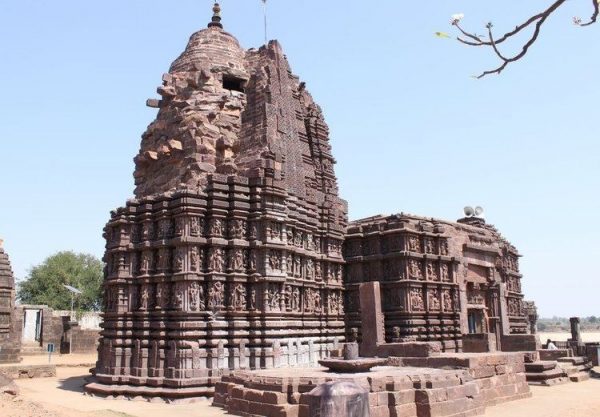
One of the most interesting and lesser-known rock temples of Maharashtra is the Anandeshwar Temple at Lasur village in Daryapur taluka in Amravati district. Built on the bank of the Purna River on raised ground, this temple built in black stone looks very much like a fort from a distance. Historical records state that this... Continue Reading →
Roha Fort, Roha Village, Nakhatrana Taluka, Kutch, Gujarat
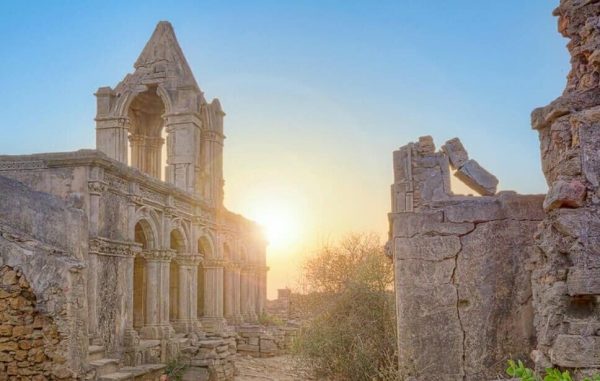
One of the oldest forts in Gujarat which at its zenith would have been an outstanding example of the grandeur and architecture typical of the Kutch region is the Roha Fort located at a little distance from Bhuj. Standing tall at 800 feet on the Roha hill overlooking the vast town of Roha, this centuries-old... Continue Reading →
Sindhudurg and Ratnagiri Kokum, Maharashtra
Kokum (Garcinia indica) called as the ‘The Kool King’ of Indian fruits flourishes in the dense forests of the Western Ghats of Maharashtra. Konkan kokum is a perennial fruit of commercial value that thrives in the scenic Ratnagiri and Sindhudurg districts. According to the locals, Ratnagiri and Sindhudurg districts have about 43,000 centuries-old kokum... Continue Reading →
Markandeshwar Temple, Chamorshi, Gadchiroli District, Maharashtra
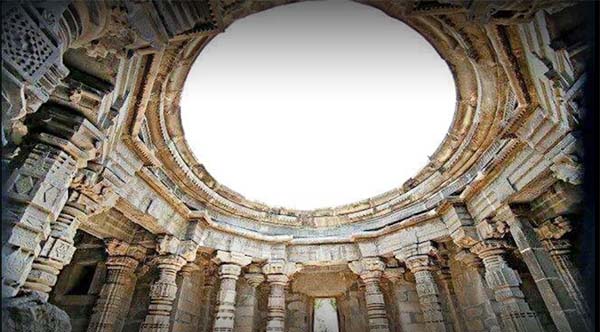
Located at the bank of the sacred Wainganga River in Markanda village in Gadchiroli district, the ancient temple complex of Markandeshwar is popularly called as the 'Khajuraho of Vidarbha'. Titled by historians and architects as the 'Most Picturesque Temple Complex', the iconic Markanda Mahadev Temple is steeped in spirituality, heritage and culture. This temple... Continue Reading →
Gondeshwar Temple, Sinnar, Nashik District, Maharashtra
One of the finest examples of the Hemadpanthi style of architecture is the Gondeshwar Temple at Sinnar. Considered to be the largest, most complete and best preserved medieval temple of the Deccan, Gondeshwar Temple bathed in the golden hue effulgence of the sun at sunrise and sunset is a spectacle to behold! According to... Continue Reading →
Swamimalai Bronze Icons of Tamil Nadu
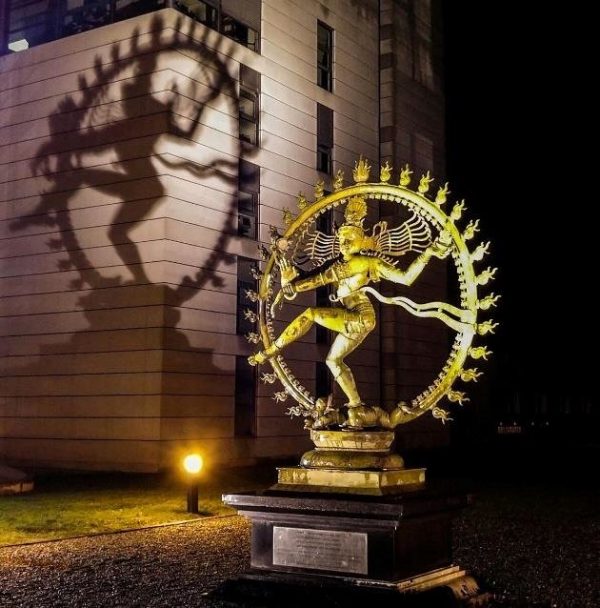
Shilpa Shastra, broadly classified as the ‘Science of Arts and Crafts’ is the supreme authority on the Chatushashti Kalas (Sixty-four arts) of the universe. The subject of Shilpa Shastra is dealt with at length in the Vedas, Puranas, Agamas and others scriptures and has been assiduously adopted by kings, craftsmen and patrons of art since time immemorial. This highly... Continue Reading →
Wooden Mask of Kushmandi, West Bengal
The quaint village of Mahisbathan in Kushmandi district in the heritage belt of Dakshin Dinajpur is famous for its unique wooden masks. The origin of this craft of mask making is unknown but the stylization, designs and motifs of the masks suggests a deep connection to their religious beliefs. These masks are an intrinsic part... Continue Reading →