
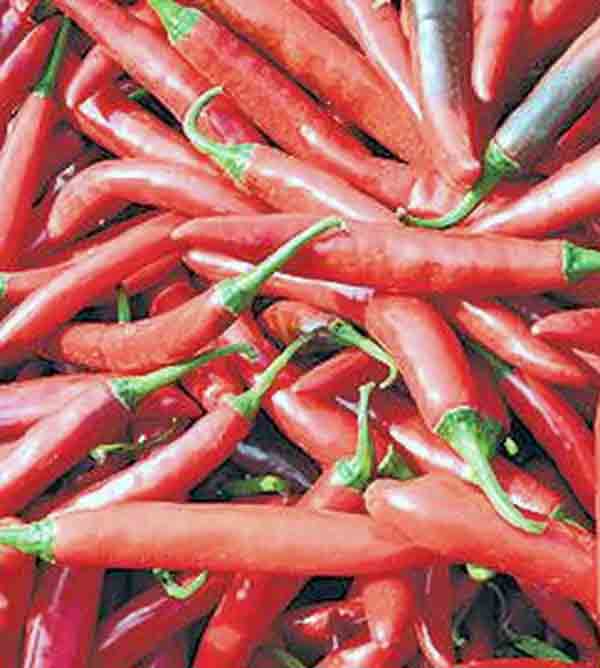
It is perhaps not known to many that India is the largest producer of chillies in the world. Indian chillies are famous for their diversity, colour, unique taste and pungency level. The states of Andhra Pradesh, Telangana, Madhya Pradesh, Karnataka and Odisha are the top chilli producers in the country with a sizeable portion of their annual produce exported to The Middle East, Europe, Australia, Nepal, UK, Bangladesh and others.
Asia’s second – largest market is Bediya located in Khargone district that hosts the annual chilli festival to showcase the wide range of dry, green and red chillies of the district. Small and marginal farmers are encouraged to engage with experts to tackle pest attacks and various diseases, to learn about seed management, drip irrigation, mulching and organic, zero and natural farming, to enhance production through study of soil, chilli and plant health and to explore export opportunities, chilli processing, product certification and value – added products.
This progressive idea by the central and state government has seen a significant rise in area under production, overall production per hectare and annual income.
The hugely popular Nimar chilli is giving a tough fight to the Guntur chilli of Andhra Pradesh and the native red chilli of Bihar and has been appreciated for its vibrant colour, taste, pungency level and heady aroma. Farmers of this district grow indigenous as well as high – yielding varieties like Pusa Jwala, Jawahar 218, Pusa Sadabahar, Agni and others to mention a few.
Khargone district in particular has seen record production of green chillies, dry chillies and chilli powder in recent years. Red chilli powder, dried cut green chilli, red chilli, dried green chilli, red chilli paste, red chilli pickle and green chilli pickle are some of the value – added products available in this district that are sold across the country.
Khargone chilli is an essential condiment in foods and a rich source of Vitamin A, C, E and P, minerals, potassium, magnesium, iron, calcium and phosphorus.
Written by Lakshmi Subramanian
 sahasa.in
Leave a comment