
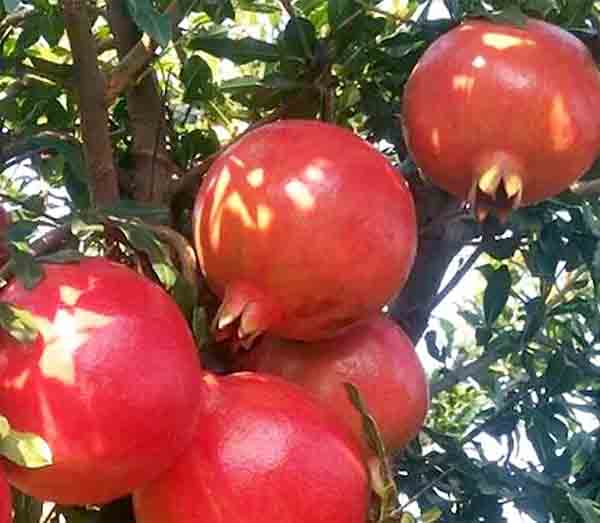
Pomegranate, a high – value fruit crop with immense economic, religious and medicinal importance is cultivated across the country with the states of Maharashtra, Gujarat, Karnataka, Andhra Pradesh and Madhya Pradesh producing the best fruit. Indian pomegranate is revered for its therapeutic properties and is rich in sodium, phosphorous and calcium and Vitamin C, B1, B2 and B3. It is therefore unsurprising that it is in great demand in the world markets and exported to the Netherlands, UK, Belgium and UAE.
Pomegranate is a hardy crop and known to survive in the harshest agro – climatic conditions of arid and semi – arid regions. It can tolerate water stress but thrives in irrigated fields. This is perhaps one of the reasons why the severe topography of the Chambal ravines in Sheopur district has seen an astronomical rise in pomegranate cultivation with small and marginal farmers.
This region has extreme climate with hot summers, cold winters, dry spells and mild rainfall in the months of July and August. The central and state government have recently launched an innovative community – based solar water lifting system for irrigating the cultivatable lands in this region which has had a positive impact on the overall produce of pomegranate, green gram, sesame, pearl millet, pigeon pea, wheat, mustard and chickpea and significantly increased the annual revenue of the farmers.
Farmers have adopted organic farming in this barren land and are cultivating native and high – yielding varieties like Bhagwa, Jyoti, Ruby and Mridula. These delicious fruits are sold in the nearby markets of Rajasthan and Maharashtra.
Since the ancient times, pomegranate has been known to be a healing food and a famous phrase – ‘sou bimar ek anar’ meaning that one pomegranate is sufficient to cure even 100 diseases or diseased persons rings true even today! The skin, tree stem, root bark and leaves are a good source of secondary metabolites such as tannins (tooth powder and leather industry), dyes (for cloth) and alkaloids. Every part of the pomegranate fruit and plant are used to make Ayurvedic medicines to treat cardiac problems, inflammations, bronchitis, dyspepsia, leprosy and dysentery to name a few.
Pomegranate has emerged as a super food in recent times and the edible part of the fruit is the seeds which are eaten fresh or as juice. Sheopur anar is also processed into candy, jam, paste, syrup, tea and jelly. Pomegranate wine is prepared from this juice and is gaining popularity abroad. The seeds along with the fleshy portions are dried and commercially marketed as anardana.
Written by Lakshmi Subramanian
 sahasa.in
Leave a comment