
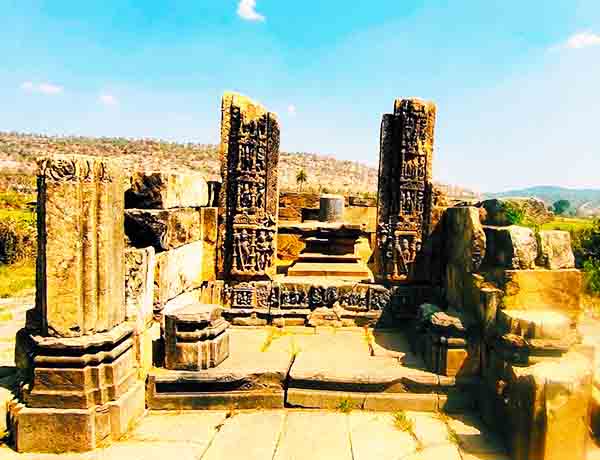
Coined the ‘Khajuraho of Sariska‘ and ‘Khajuraho of Aravalli’, the Neelkanth Mahadev Temple situated atop a hillock in the midst of stunning natural beauty is a prized architectural gem of the ancient times. This temple located deep inside the protected Sariska Tiger Reserve is believed to have been established by the Pancha Pandavas.
According to the Hindu scriptures, the Pandavas desired to consecrate a Shiva Linga on the banks of the Banganga River at Bairath (Viratnagar) and prayed to Bhagawan Shiva in Kashi to seek His help. Bhagawan Shiva agreed to accompany the Pancha Pandavas on the condition that they will have to consecrate the Shiva Linga when it became day break.
Though the Pancha Pandavas had intended to take Bhagawan Shiva to Bairath that is 30 kms away from Sariska, they abided by their promise and installed the Shiva Linga at this spot at sunrise. This place used to be called Para Nagar in the Mahabharat period
They lit the akhanda jyoti (eternal light) in the sanctum sanctorum to consecrate Bhagawan Shiva. It is interesting to note that the akhanda jyoti burns even today. They also built a stepwell overnight to perform the jala abhishek. The water has not dried up till date.
There are many references to this temple and the priceless Neelam stone (blue sapphire) Shiva Linga of this temple in the Mahabharat. The three shrines dedicated to Bhagawan Shiva, Bhagawan Brahma and Bhagawan Vishnu are deemed to be the oldest in the temple complex that took its present form between the mid – 7th century and 10th century.
Maharadhiraja Parmeshwara Matthandeva of the Gurjara – Pratiharas is credited with the construction of the temple complex as per an inscription dated 961 CE. Another inscription mentions Raja Ajayapal of Rajorgarh of having contributed carvings and sculptures to this Shiva Temple in 1010 CE.
Historical records state that this grand temple complex was desecrated and looted by the Muslim barbarian Aurangzeb who razed several temples (believed to be about 200 in number) to the ground. The main shrine of Bhagawan Neelkanth managed to survive his savagery because a bike of bees suddenly attacked Aurangzeb and his men.
This lone temple surrounded by ruins is a trikuta (triple – shrined) with an entrance porch, a common ranga mandapa supported by four pillars and pancharatha design garbha grihas. The west – facing shrine of Bhagawan Shiva has a magnificent shikhara while the shikharas of the other two shrines have since collapsed.
The entrance doorways (door jambs and lintel) of the shrines dedicated to Bhagawan Brahma and Bhagawan Vishnu are profusely decorated with sages and various forms of Bhagawan Vishnu respectively.
The rangamandapa has richly embellished ceiling panels of concentric coffered cusps, lotus, floral and geometric patterns. The pillars from the base to the capital are adorned with carvings of apsaras, gandharvas, Sapta Matrikas, musicians, dancers, gods and goddesses.
The entrance doorway of the main shrine is decorated with beautiful carvings and has Bhagawan Nataraja seated on the Lalata Bimba. The external facades have niches housing sculptures of Bhagawan Narasimha, Tripurantaka, Hariharaarka and Risabharuda along with figures of apsaras, gandharvas, sages, Ashtadikpalakas and others.
There are countless bases of temples, broken pillars, sculptures, carved panels, inscriptions and figures in erotic poses on stones strewn about. The captivating imagery of sex kriyas as they are known was a common feature in that era as temples were considered to be the appropriate medium to impart sexual knowledge. The exquisitely comprehensive Rati krida is an unparalleled wealth of wisdom.
Written by Lakshmi Subramanian
 sahasa.in
Leave a comment