
The princely state of Rajputana has since the ancient times been an important seat of Vedic philosophy, learning and spirituality. Archaeological excavations conducted across Rajasthan have revealed the existence of thriving Vedic practices, Vedis (sacrificial altars) and yūpas (sacrificial pillars).
It is evident that successive dynasties that ruled this rich province were totally dedicated to Advaitha and the quintessence of the Vedas. The discovery of yūpas in particular were an eye – opener as they are dated to the 2nd to 4th century CE when there was a significant inclination to Hinduism and Vedic sacrifices, rites and rituals.
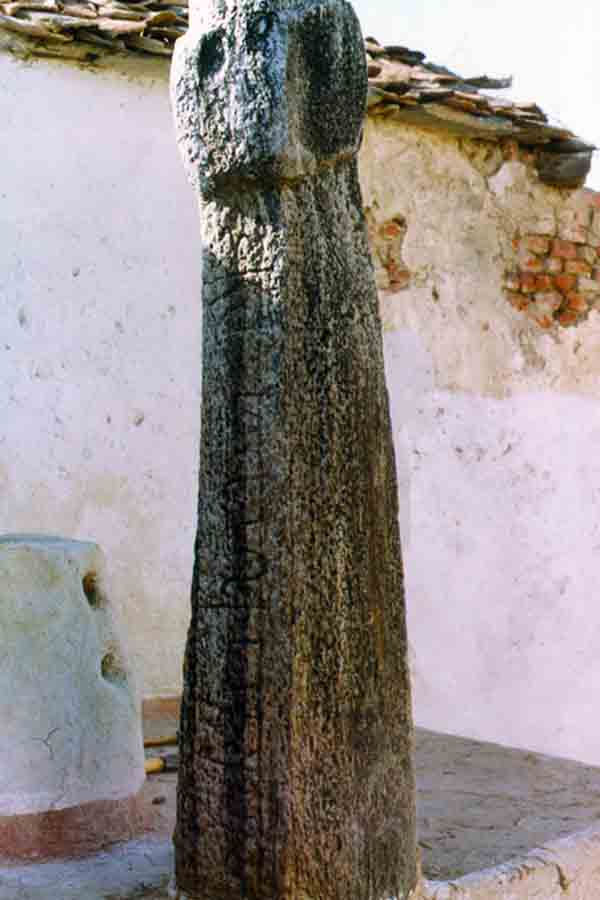
These yūpas were raised specifically for the performance of yagnas and homas as per the tenets of the Vedas. One such yūpa belonging to the period of the Malavas of Rajathan was a chance discovery in the courtyard of an old temple at Bichipura at Nagar or Malavanagar, the former capital of the Malavas of Rajasthan.
This yūpa is 10 feet 6 inches in height with an inscription in Brahmi script and Sanskrit language, “सं ३२१ फगुन शुक्लपक्षस्य पञ्चदश अहिशर्म अ (ग्नि) होतुस्य धरकपुत्रस्य यूप (श्चपुण्य) मेधतु”. The inscription does not mention the sacrifice that was performed here by an agnihotri named Dharaka.
Written by Lakshmi Subramanian
 sahasa.in
Leave a comment